Cardinal Flower
Written by Carmin Nezat
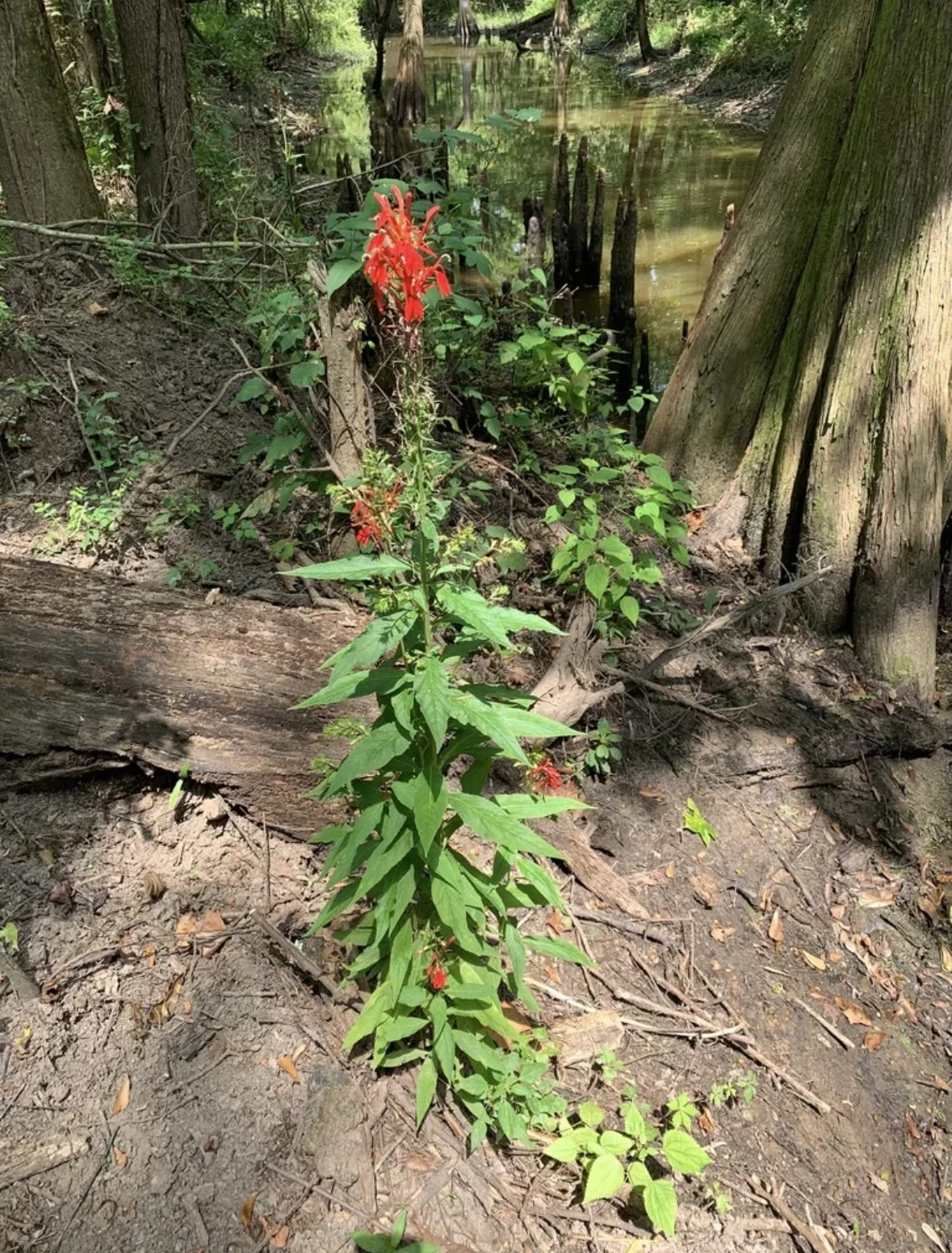
Fully mature Lobelia cadinalis amongst the cypress knees
Cardinal Flower, Lobelia cardinalis, is an herbaceous perennial in the bellflower family (Campanulaceae) and native to the eastern United States. Both the scientific and the common names were inspired by the color of the robes of the Roman Catholic cardinals; same origin for the name of our red songbird.
This flower is sometimes called scarlet lobelia, red lobelia, Indian tobacco (this is more often the common name for Lobelia inflata), and eyebright (not to be confused with the Euphrasia genus eyebrights). In Cajun country, it may be referred to as “Lobelie Cardinale.”
It is most often found growing wildly in moist, boggy locations and can reach up to five feet tall. Cardinal Flower is a perennial, but it is a short lived one, typically only living for a few years. However, they do self-seed, and can be propagated by digging up the shoots that appear around the base of the plant. It is best practice to divide the shoots in spring or fall. It can tolerate full sun to partial shade,and makes its vivid blooms in the late summer to early autumn, Red on Cue: for the migrating ruby-throated hummingbirds.
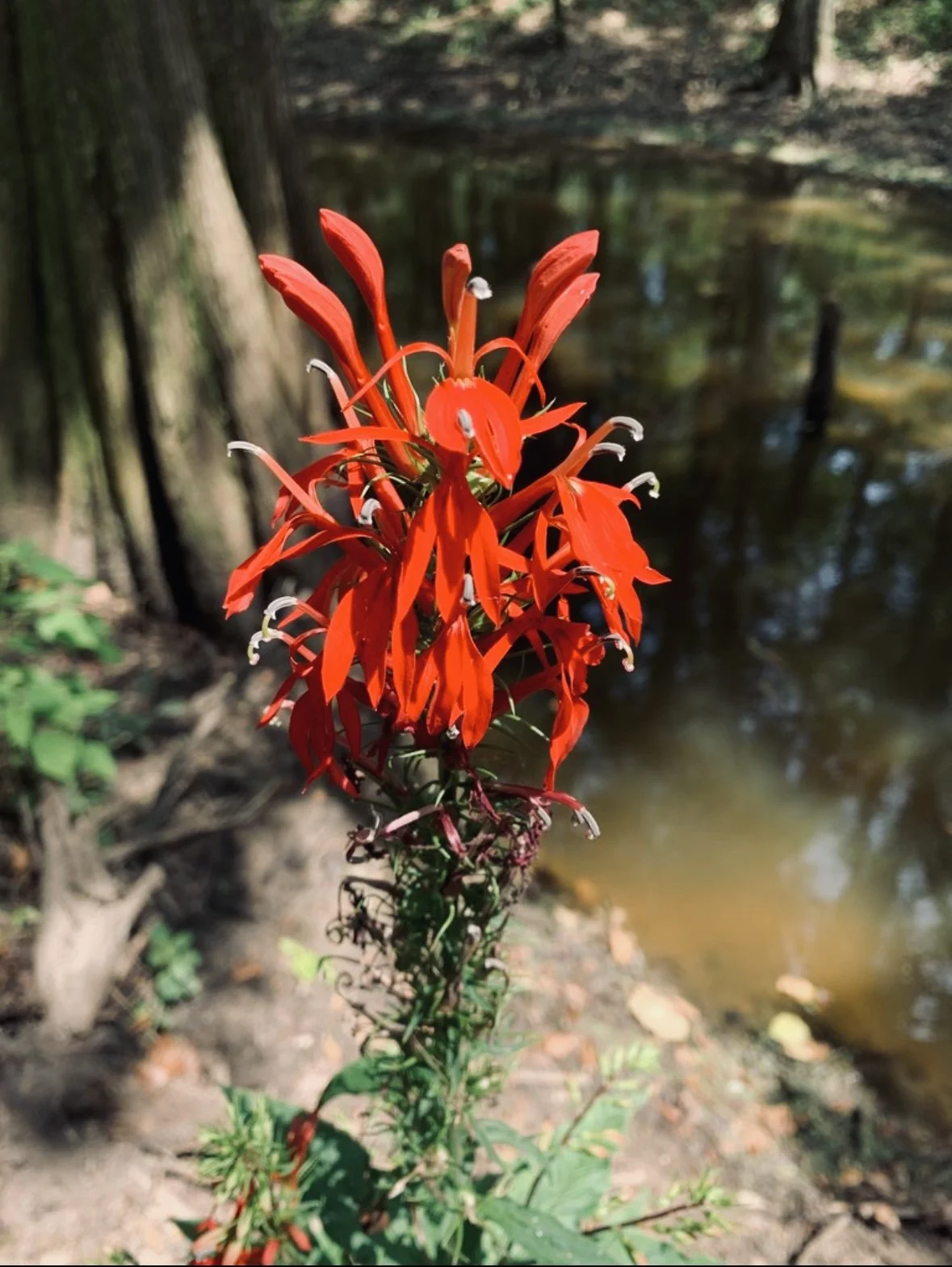
Cardinal flower is the only one of the 19 lobelia species in the eastern U.S. that has developed a pollinating relationship with hummingbirds, as the other species are almost all blue; blue, yellow and white flower blooms (in general) are designed for insect eyes that cannot perceive the color red. But hummingbird eyes can, and do so specifically by design. The cone cells in a hummingbird's retinas feature microscopic oil droplets filled with red and yellow pigments. These droplets act as natural light filters that boost sensitivity to warm tones like red, orange, and yellow, while muting cooler shades like blue.
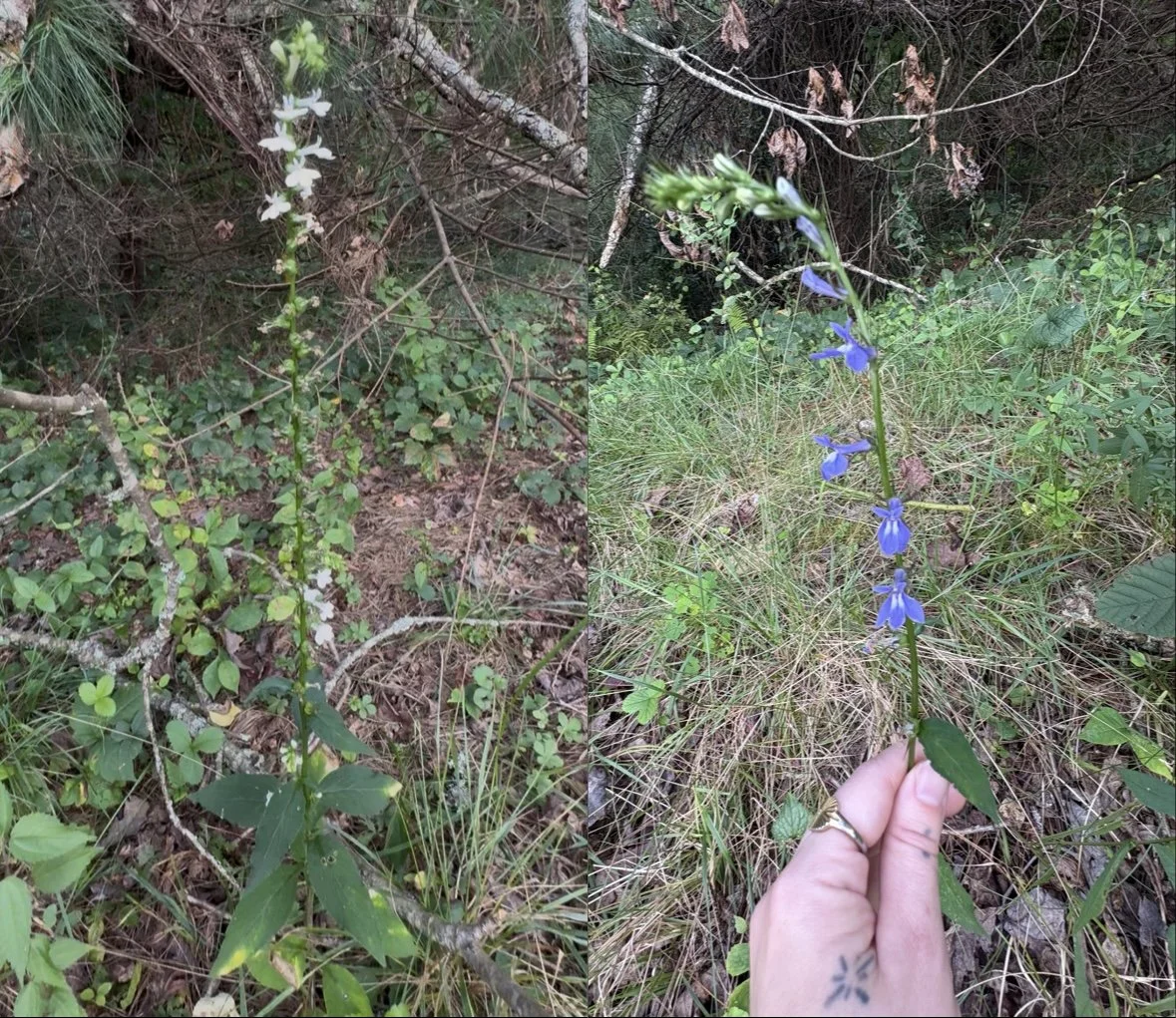
A white and blue lobelia species growing wildly
Although all lobelia species are adapted for long-tongued insects like butterflies and moths, bees have been known to feed on the nectar from these flowers by chewing at the bottom of the bloom to reach its reserves.
The shape of the flower of Lobelia cardinalis seems to be perfectly tailored to its pollination process via hummingbird (see photo below).
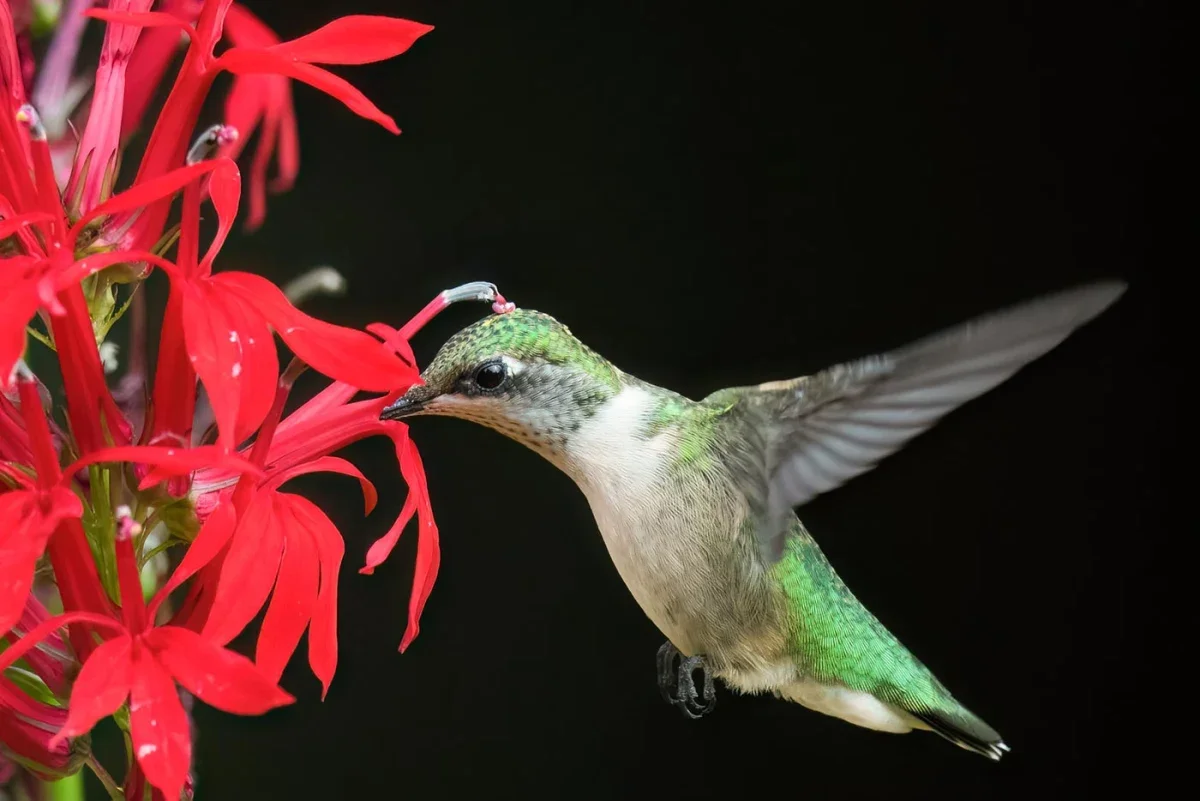
See how the pollen-saturated anther rests on its head? Photo credit: Northernwoodlnads.org
Lobelia cardinalis for your rain garden, low spot, or waters’ edge: this plant was made for it.
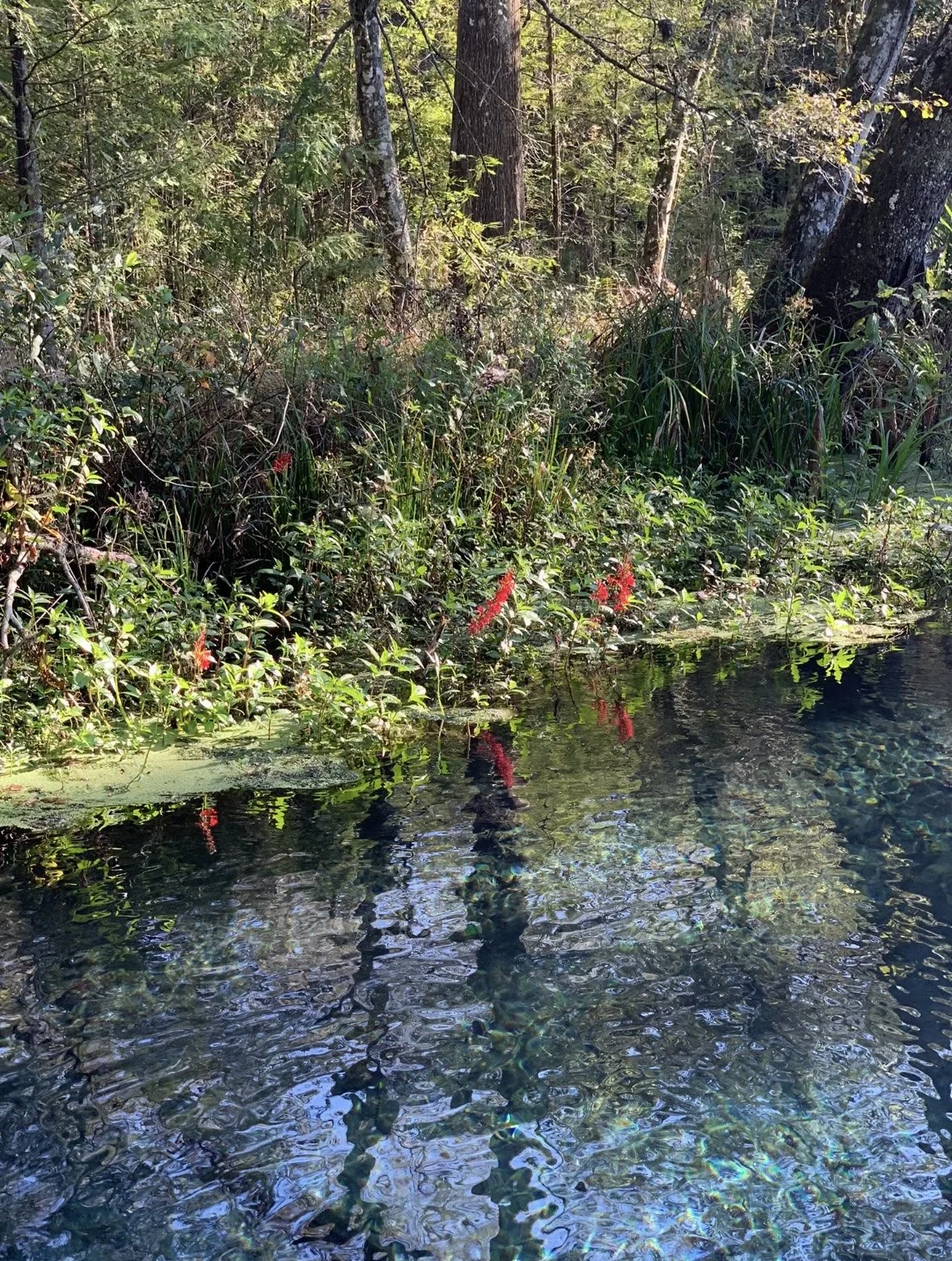
Lobelia cardinalis growing wildly along a stream bank
Cardinal flower is a true wetland plant. It thrives in standing water, boggy soil with full sun to partial shade.
But what exactly is a rain garden? A rain garden is not a water garden. As a matter of fact, it is a garden that is mostly dry and typically only holds water during or after a rainfall event.
They are designed to temporarily hold and soak in rainwater runoff from roofs, patios, driveways, etc. and compared to a conventional grass lawn, allow for 30% more water to soak into the ground. Rain gardens allow for groundwater to be filtered through vegetation (like the lovely Cardinal flower, native hibiscus, native iris, horsetail, dwarf palmetto and/or swamp sunflower), rather than flowing directly into drainpipes or ditches that feed into the nearby streams and ponds. The benefit is that this filtered water will recharge groundwater aquifers with alot less pollution. Additionally, rain gardens reduce pressure on stormwater pumping stations. They are ideal for South Louisiana’s below sea-level elevation.
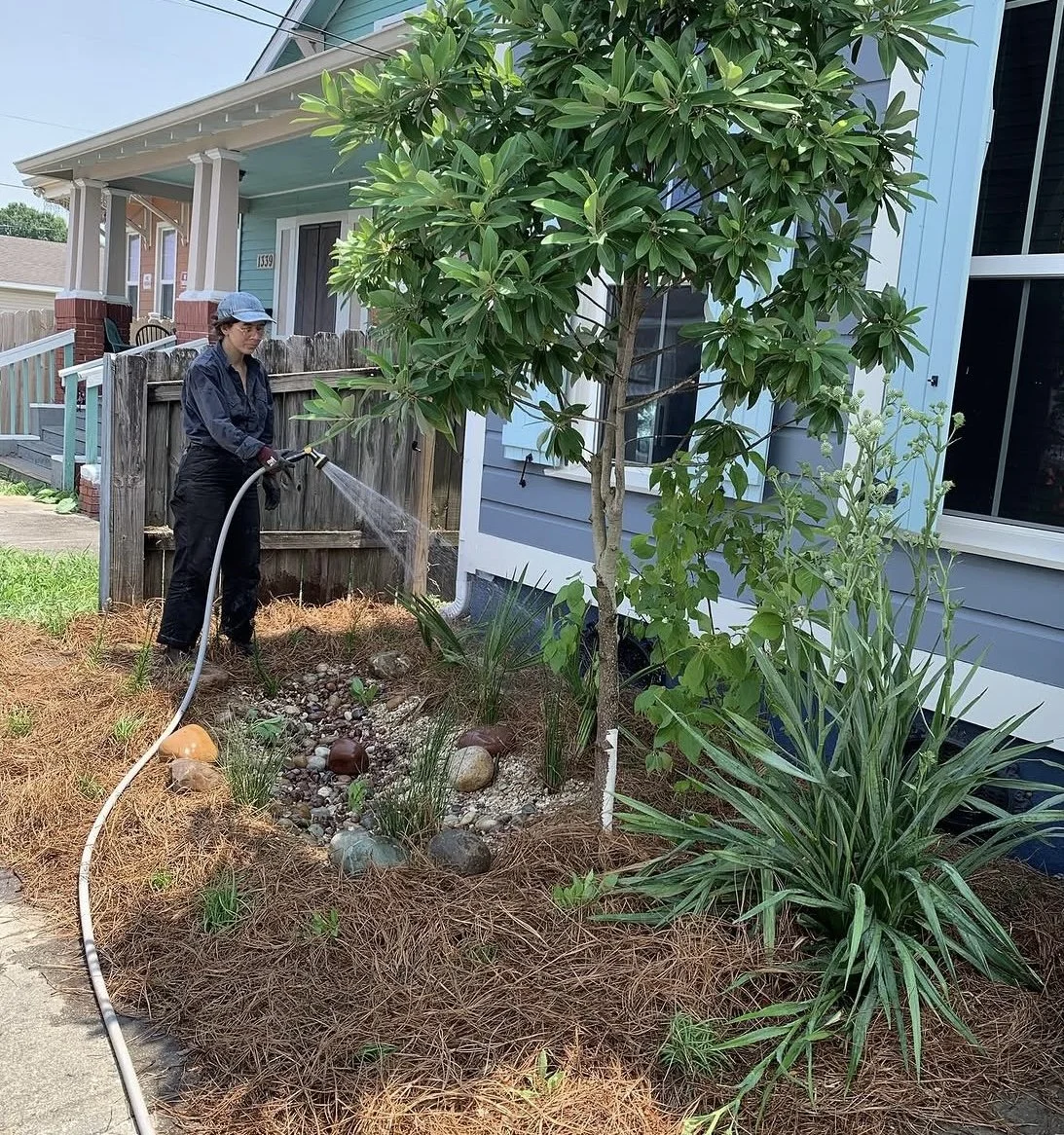
2024, Magda watering a newly installed rain garden on Bartholomew Street in New Orleans near the industrial canal. Rain gardens do not have to be huge in order to enhance sustainability or provide a cooling station for wildlife.
https://www.lsuagcenter.com/articles/page1749735508523
Read full article by clicking link above
Historical traditional notes: There are several documented medicinal uses of Lobelia cardinalis via the indigenous of North America and the Creoles of Louisiana. It is mostly noted for the use of its roots in aiding headaches, worms and rheumatism.
https://vestalgrove.blogspot.com/2019/08/evolved-for-each-other-bird-and-flower.html
https://www.loe.org/shows/segments.html?programID=11-P13-00031&segmentID=5
https://plantnative.org/native-plants/lobelia-lobelia-puberula.htm
https://northernwoodlands.org/articles/article/hummingbirds-cardinal-flowers-pollination
All About Rain Gardens – What They Are & How to Build One
https://www.lsuagcenter.com/articles/page1749735508523
Fuselier, Beverly & Perrin, Mary Broussard. “Healing Traditions of South Lousiana: Prayers, plants and poultices.” Andrepont Publishing, Opelousas, Louisiana. 2022. P 74,75.